This paper investigates the dynamic transmission of stock market wealth shocks to household consump tion in Indonesia, a large emerging market economy, over the period 2019–2025. Using a novel four-step methodological framework combining GARCH(1,1) shock extraction, cointegration analysis, error correc tion modeling, and VECM-based impulse response functions, we establish several key findings. First, the wealth effect exhibits a significant two-month lag, with an 8% market crash reducing retail sales growth by approximately 5.9% after 60 days. Second, the transmission mechanism is threshold-dependent: only extreme shocks exceeding 1.5 standard deviations trigger consumption responses, while normal volatility proves insignificant, suggesting a non-linear “panic trigger” mechanism. Third, the adjustment speed is sub stantial, with 37.4% of disequilibrium corrected monthly and a shock half-life of just 1.48 months. Fourth, the response is asymmetric: crashes significantly depress consumption, while booms show no statistical im pact, consistent with loss aversion frameworks. Our findings challenge conventional consumption smooth ing models and suggest that sentiment-driven precautionary motives dominate the wealth effect channel in emerging markets. Policy implications include a two-month intervention window before consumption bottoms out following market crashes.
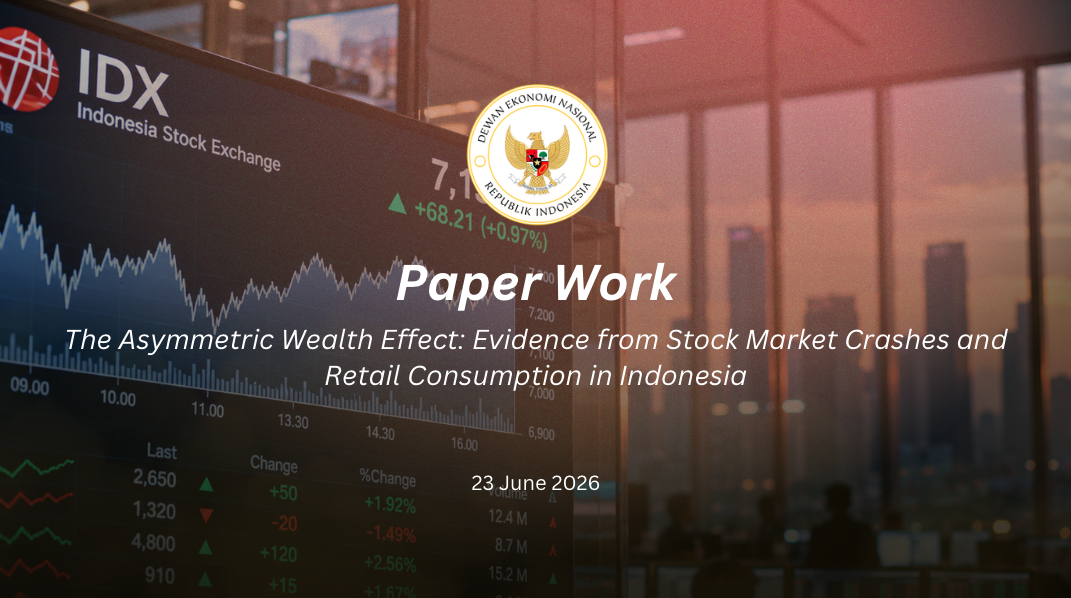
Working Paper
Jun 23, 2026
The Asymmetric Wealth Effect: Evidence from Stock Market Crashes and Retail Consumption in Indonesia
Authors
I Made Krisna Gupta
Advisor
Alfan Mansur
Advisor
Timothy Ginting
Junior Advisor


Related Publications
View All Publications →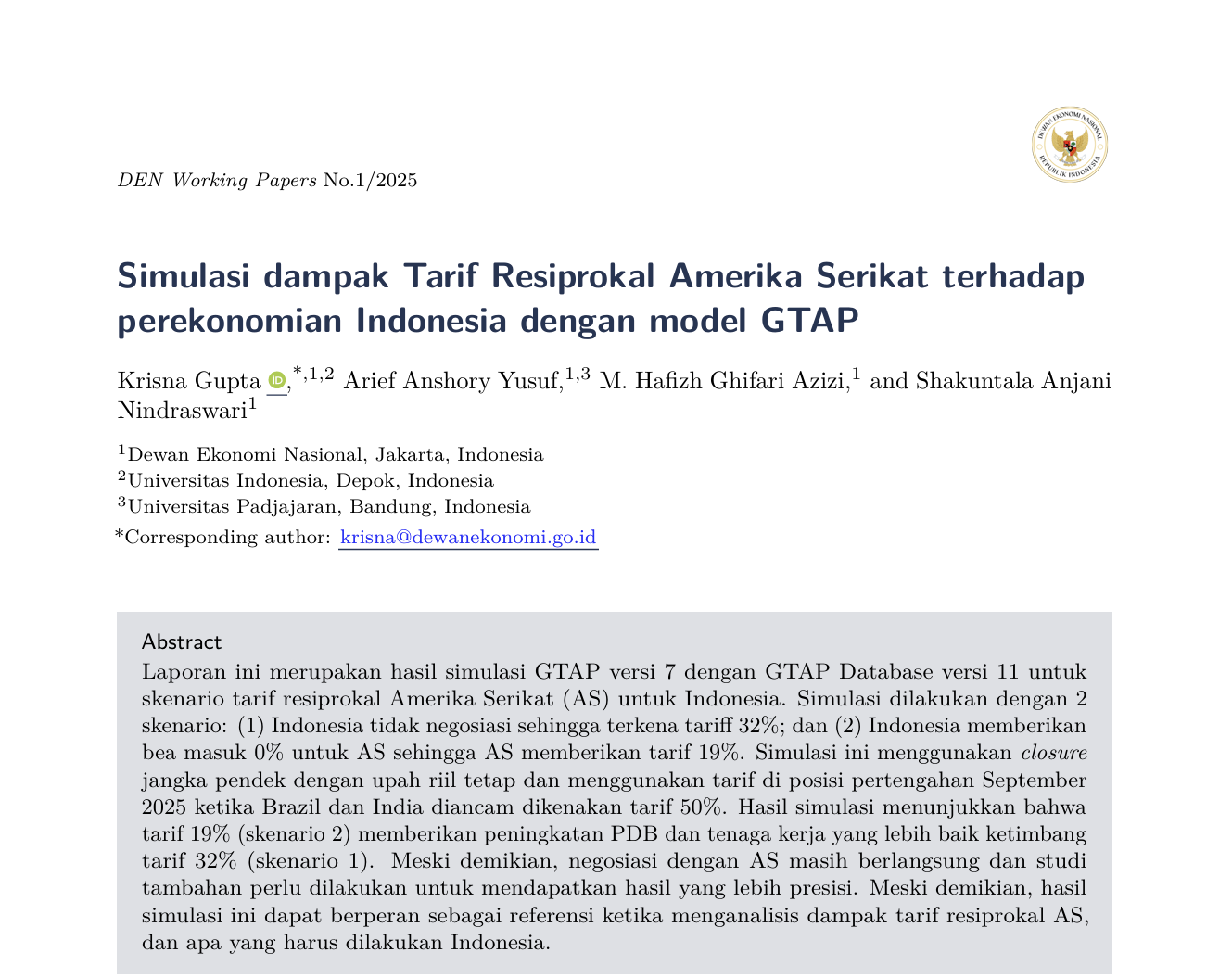
Working Paper
Simulation of the Impact of U.S. Reciprocal Tariffs on the Indonesian Economy Using the GTAP Model
I Made Krisna Gupta
20 Oct 2025
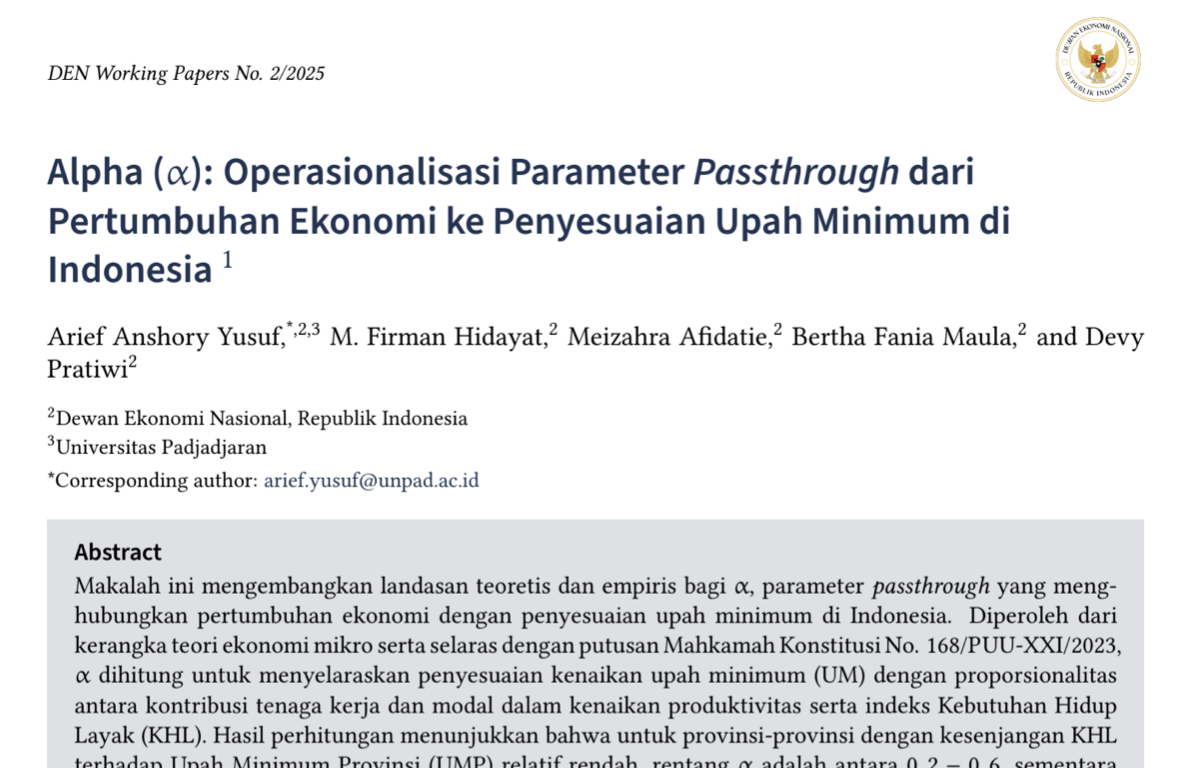
Working Paper
Alpha (α): Operasionalisasi Parameter Passthrough dari Pertumbuhan Ekonomi ke Penyesuaian Upah Minimum di Indonesia
Arief Anshory Yusuf
19 Dec 2025
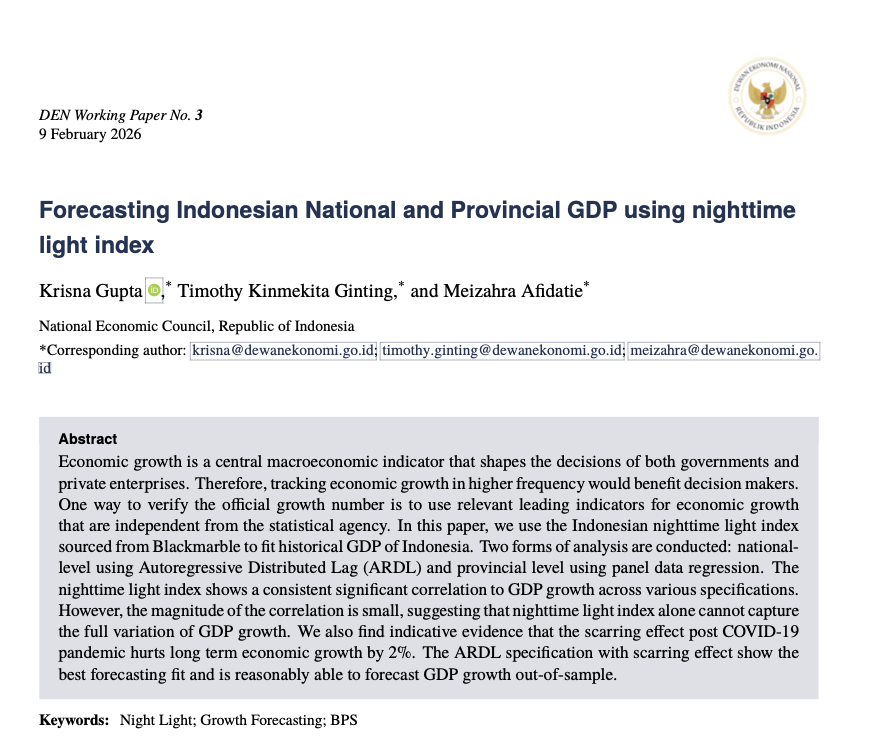
Working Paper
Forecasting Indonesian National and Provincial GDP using nighttime light index
I Made Krisna Gupta
09 Feb 2026
Working Paper
Kebijakan Bebas Visa Kunjungan untuk Memperkuat Penerimaan Devisa dan Neraca Transaksi Berjalan
Gaffari Ramadhan, Sevi Tyas Murti Vinastya, Ryan Alfaedison Ginting, Nasya Putri Kainama, Muhammad Husni Abdul Fatah
20 May 2026